
There Are Two Kinds of Time. Most People Only Live in One.
Dr Harvey Smith | Sport and Exercise Psychologist | Glasgow
Time
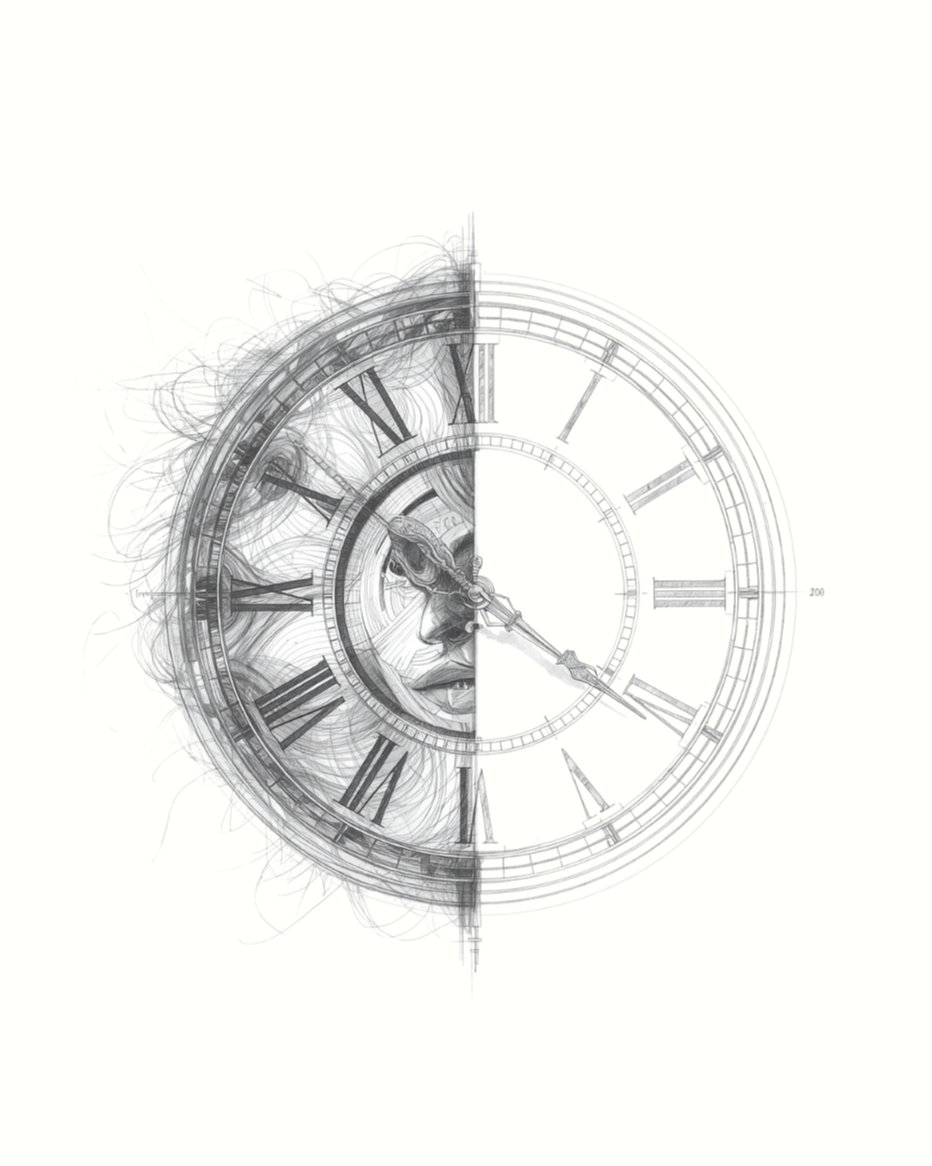
Chronos is the time we all live by. The clock on the wall. The seconds ticking down. The deadline approaching. In sport, it shows up as the scoreline and the pressure of knowing how long is left. In life, it shows up as the applications sent, the hours put in, the process followed even when results are slow to come.
But the Greeks had another word. Kairos. Not time as a quantity, but time as a quality. The right moment. The opportune moment. The moment that is not just passing, but arriving.
The two work together
It would be easy to read this as an argument against Chronos. It is not.
Chronos is where the work happens. The early mornings. The repetitions. The job applications that do not get a response. The training sessions that feel unremarkable. That is Chronos time. It is not glamorous. But it is necessary.
Because Kairos does not arrive for the unprepared.
The opportunity that appears suddenly, the door that opens, the moment in a game where everything comes together: these things look like luck from the outside. But they are almost always the product of Chronos work done quietly over a long period of time. Chronos lays the foundation. Kairos is the moment that foundation was built for.
The athlete who slows the game down
You have probably seen it. An athlete who seems to operate at a different pace to everyone around them. Not faster, necessarily. Clearer. They make decisions that look obvious in hindsight but that no one else seemed to see coming. They are not rushed by the scoreline or the clock.
That is not a physical gift. It is a psychological one.
Those athletes have learned to shift from Chronos to Kairos in the moments that matter. From time as pressure to time as possibility. The research on flow and present-moment awareness points toward the same thing. Peak performance is almost always characterised by a transformation of time perception. Things slow down. Decisions feel clearer. There is only now, and what now requires.
How to cultivate it
You cannot force Kairos. Much like flow or mushin, it tends to arrive when the conditions are right rather than when it is demanded. But you can create those conditions.
Consistent preparation builds the kind of trust in your own ability that quiets the Chronos noise. Mindfulness practice, whether formal or informal, trains the capacity to return attention to the present moment rather than being pulled into the past or future. Over time, that practice changes how you relate to pressure. It does not make the clock disappear. It stops the clock from being the loudest thing in the room.
The goal is not to ignore the clock. It is to stop being owned by it.
The question worth asking
Chronos says: there is not enough time, the pressure is building, what happens if this goes wrong.
Kairos says: what does this moment need from me?
Honour Chronos. Do the work. Follow the process. Trust that the applications sent, the sessions completed, and the preparation done quietly in the background are all accumulating toward something.
Because when Kairos arrives, the only question is whether you are present enough to recognise it and ready enough to meet it.
The moment does not just pass. It arrives.
If you are curious about developing that capacity, I offer a free 15-minute consultation. No commitment. Just a conversation.
📞 0141 673 3973
🌐 drharveysmith.com
Let's have a wee chat.
This post draws on peer-reviewed research. Key sources are listed below.
Csikszentmihalyi, M. (1990). Flow: The psychology of optimal experience. Harper and Row.
Jackson, S. A., & Csikszentmihalyi, M. (1999). Flow in sports. Human Kinetics.
Kabat-Zinn, J. (1994). Wherever you go, there you are: Mindfulness meditation in everyday life.Hyperion.